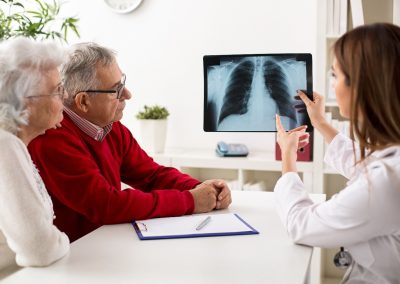
Arnot Health and Cayuga Health, members of Centralus Health, offer low-dose lung cancer screenings to eligible patients. (Photo credit: Adobe Stock)
November is Lung Cancer Awareness Month, a time to shine some light on one of the biggest cancer killers in the world. Local healthcare professionals say they see dozens of lung cancer patients every year.
“Lung cancer is one of the most prevalent cancers in our community. Arguably, more prevalent than colon and breast cancer, but that varies,” says Cyndi Davis, Nurse Practitioner at Cayuga Health, a member of Centralus Health.
The CDC recommends patients between the ages of 50 and 80 who have a 20 pack-year smoking history and currently smoke, or have within the past 15 years, get screened. A 20 pack-year smoking history means smoking an average of one pack of cigarettes per day over 20 years.
“If you are a smoker, had asbestos exposure, or think you might need lung cancer screening, you should talk to your doctor about a referral,” says Hannah Potts, Nurse Practitioner at Cayuga Health, a member of Centralus Health.
The risk of developing lung cancer increases the more you smoke and the longer you smoke. Doctors encourage people to stop as soon as they can. Though the health benefits of quitting start immediately, long term effects can last up to 15 years.
“Once you stop smoking, you still have that built-up risk of lung cancer from all the accumulated exposure over the years. This makes annual screenings necessary to reduce risk. You don’t just get screened once. This isn’t like a colonoscopy where you get screened once and then wait 10 years. This risk is ongoing,” says Dr. Aleksandr Kalininskiy, pulmonologist at Arnot Health, a member of Centralus Health.
If providers see any unusual activity in a lung screening, they can diagnose and treat lung cancer early.
Once a year, patients get a low dose CT scan to look for spots or nodules. Your provider will show you the images of what your lungs look like. If there is a spot, Dr. Kalininskiy says most patients ask what will happen next.
“Depending on how big it is, what it looks like and where it is there are different ways to deal with it. If we’re not too concerned, sometimes watching and waiting is the way to go.”
Lung cancer is slow growing. If the nodule reaches a point where it becomes concerning, providers will order a biopsy, discuss results, plan surgery and start treatment if necessary.
A lung cancer diagnosis can be scary. When patients get the news, Dr. Ahmed Khan, thoracic surgeon, says people ask the same serious, daunting question: How long do I have to live? Surgeons like Dr. Khan help people move forward by helping them understand the scope of their disease. He spends the first visit with patients explaining what’s happening with their disease, approaching each situation based on the form of lung cancer and its stage.
“That explanation is difficult in lung surgery because there are a lot of big words. There are different types of cancer: small cell, non-small cell. If we can categorize a lung cancer patient with the type and stage of cancer they have, then our conversation with the patient is very truthful,” Dr. Khan says.
The best approach to treatment varies based on the results of the biopsy. Options may include curative resection or a formulated plan to help patients live with the diagnosis. If a patient is eligible for surgery, doctors must consider the patient’s individual health risks and factors. Before moving forward with surgery, providers will order pulmonary testing to better understand lung function.
“The testing gives us their baseline lung capacity, which helps us understand how much we can take out.”
Patients who get treatment early, are open about their health habits, and follow their plan of care have a higher chance of successful treatment. The goal is to address lung cancer before it has the chance to spread.
“Knowing the patient from head to toe is what makes us good at what we do,” Dr. Khan says.
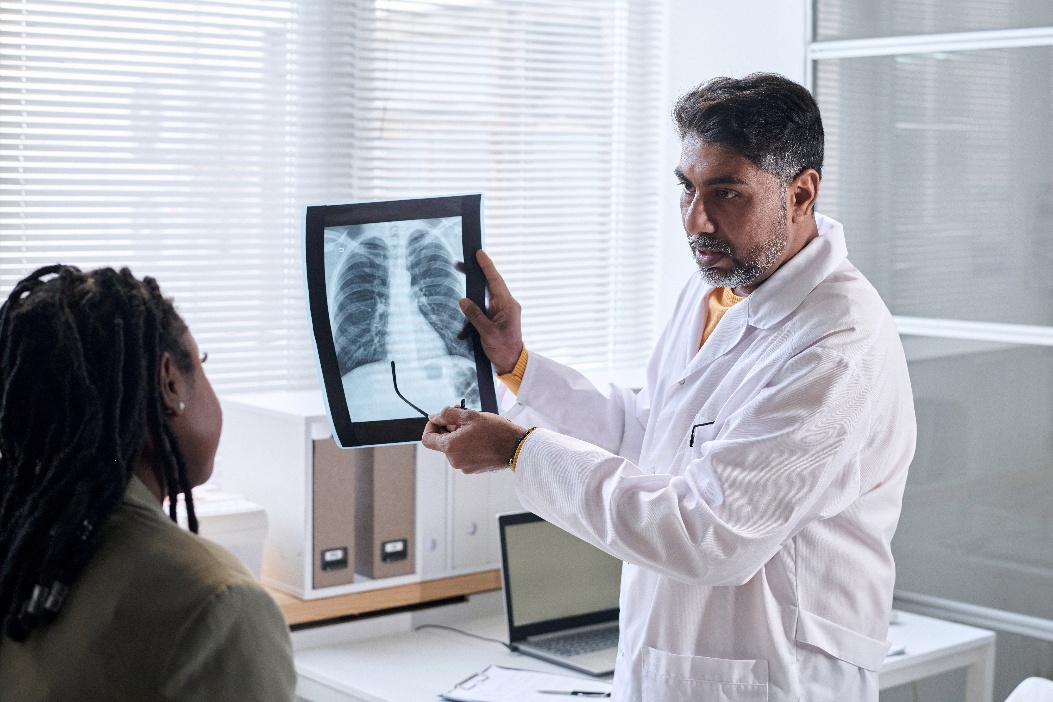
Patients who get treatment early, are open about their health habits, and follow their plan of care have a higher chance of successful treatment. (Photo credit: Adobe Stock)
Arnot Health offers a wide range of pulmonary diagnostic services at Arnot Ogden Medical Center, 600 Roe Avenue, Elmira and Ira Davenport Memorial Hospital, 7571 NY-54, Bath. To find out if you are eligible for a screening or to make an appointment, click here.
Cayuga Health Pulmonology and Sleep Services are offered at Cayuga Medical Center, 201 Dates Drive, Suite 301, Ithaca; Schuyler Hospital, 220 Steuben Street, Montour Falls; 260 Tompkins Street, Cortland. To request an appointment, click here.