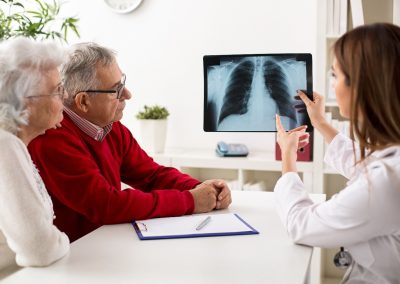
The minimally invasive Zephyr valve procedure implants a tiny one-way valve that allows patients to breathe easier by expanding lung tissue and preventing air from being trapped. (Adobe Stock)
Chronic obstructive pulmonary disease is among the most common lung diseases in the world. According to the World Health Organization, the lung disease is the fourth leading cause of death globally. In people with COPD, the lungs can get damaged or clogged with phlegm. Symptoms include coughing, difficulty breathing, wheezing, and fatigue.
“COPD is a disease that can be very hard to control. We use inhalers, nebulizers, things like that, to help with symptoms,” says Dr. Aleksandr Kalininskiy, a pulmonologist at Arnot Health, a member of Centralus Health.
Chronic inflammation causes restricted airflow, making people with COPD struggle to get air in and out of their lungs. Doctors may turn to medications like inhalers to alleviate a patient’s discomfort, reduce inflammation, and open airways. Frequent use of medication can cause airway muscle cells to become less responsive, reducing the effectiveness of bronchodilator drugs.
If you have shortness of breath, Cayuga Health, a member of Centralus Health, offers inpatient and outpatient pulmonary function tests (PFTs) and a Shortness of Breath Clinic. The tests offered, like spirometry and PFTs, measure lung volume, capacity, rates of flow, and gas exchange.
PFTs are one of the qualifications for the minimally invasive procedure: the Zephyr valve, a tiny one-way valve that allows patients to breathe easier by expanding lung tissue and preventing air from being trapped.
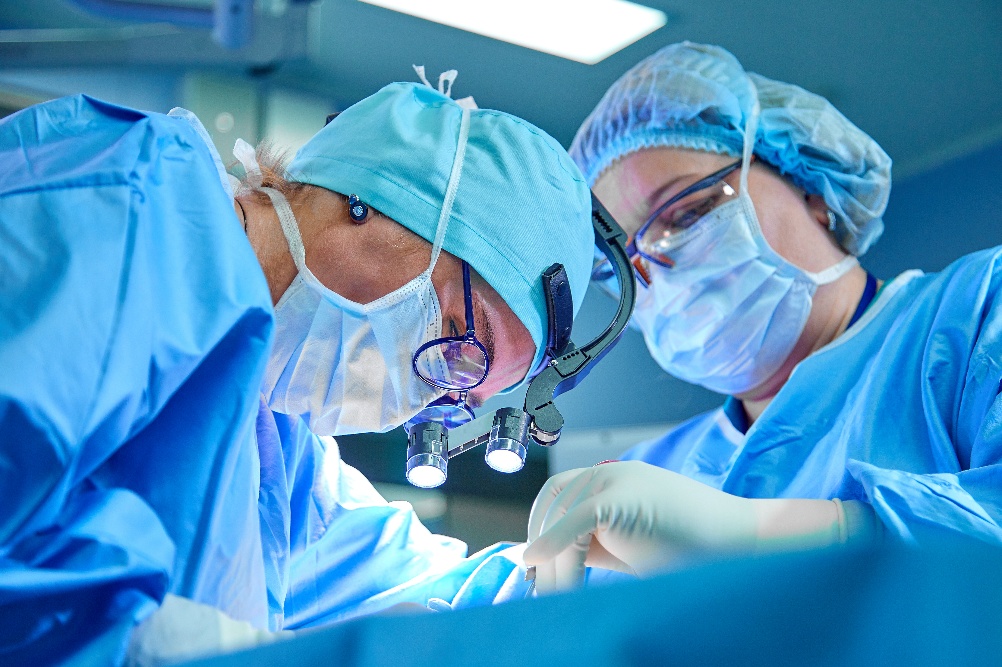
“We go in through the mouth, into the lungs and place these valves on one of either side of the lungs. The valves let air in, but they don’t let any air out. You’re able to take big breaths in and out,” says Dr. Kalininskiy.
In 2022, Kathy Rohrer, a former athlete, began to suffer from shortness of breath. Her regular workouts came to an abrupt stop when she got sick with a virus known to affect the respiratory system.
“I got COVID and shortly after that, I started having problems breathing. I smoked a long time ago, but this was definitely COVID related. It just got worse and worse.”
Kathy says walking from one room to another felt like an impossible feat.
“I couldn’t do anything. I couldn’t even climb up a flight of stairs at home. I’d have to stop and sit down.”
Eager to reclaim her independence, Kathy turned to the pulmonologists at Arnot Health, a member of Centralus Health. At the time, the Zephyr valve wasn’t an option, and she struggled to find a treatment that helped alleviate her symptoms. After a lot of trial and error with medications and modifying what would otherwise be an active lifestyle, Dr. Kalininskiy told Kathy she would likely qualify for a new treatment option.
A CT scan, a lung perfusion test and a pulmonary function test proved Kathy was an ideal candidate for the Zephyr valve. Without hesitation, Kathy agreed to move forward with the non-invasive procedure, and within a day, noticed a difference.
“I was in the ICU for three days after the procedure, but I could breathe. I was better.”
Since the procedure, Kathy has been able to not only resume her daily activities but excel with the help of rehabilitation.
“I did pulmonary rehab after I had the valves put in, which prepared me to go home and do things on my own. I’ve been able to do so much more. I’ve gone back to the gym, I’m doing some weightlifting and walking on the treadmill. I can do things again and I don’t have to worry about it.”
Kathy continues to improve. During the summer of 2025, she completed a 5K, earning a medal and the ability to call herself an athlete again.
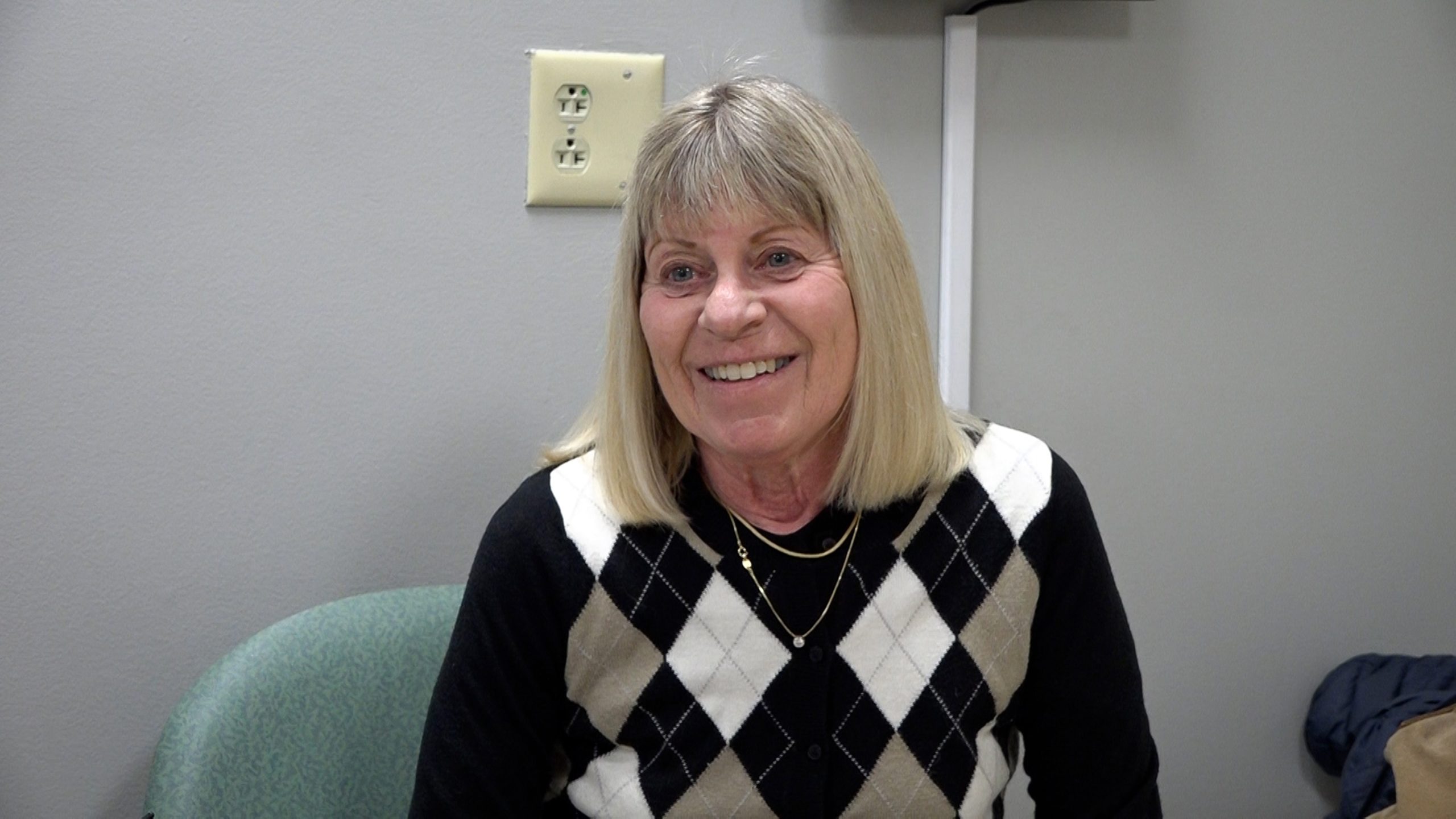
Since the Zephyr valve procedure, Kathy has been able to excel in her daily activities. (Centralus Health)
Arnot Health and Cayuga Health, members of Centralus Health, both offer supportive, medically supervised pulmonary rehabilitation programs for those with chronic lung diseases.
Arnot Health’s Pulmonary Associates are located at 600 Roe Avenue, Elmira. To find out if you are eligible for a lung cancer screening or to make an appointment, call (607) 271 – 3780 or click here.
Cayuga Health’s Pulmonary and Sleep Services are located at 201 Dates Drive, Suite 301 in Ithaca and 260 Tompkins Street in Cortland. To request an appointment, call (607) 882 – 2277 or click here. Cayuga Health’s Shortness of Breath Clinic is located at 310 Taughannock Boulevard, Ithaca; and 1122 Commons Avenue, Cortland. For a consultation, call (607) 252 – 3580.