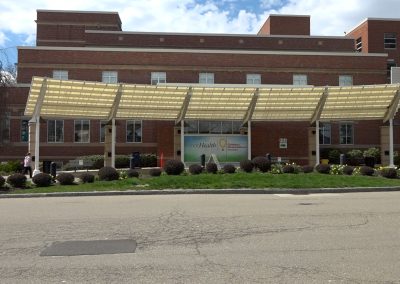
Credit: Adobe Stock
If you’re over the age of 45, health experts recommend getting screened for prostate cancer.
When it comes to men’s health, prostate cancer tends to fly under the radar. The disease can go undetected for years, especially in the early stages when symptoms may not be noticeable. Prostate cancers are slow-growing, and symptoms typically don’t start to pop up until it’s progressed to a later stage.
The prostate is a tiny walnut-shaped gland in the pelvis that sits below the urinary bladder. This gland is responsible for producing and transporting seminal fluid through the male reproductive system. If cancer develops, urinary function is usually affected first. In the early stages, men may notice a change in bathroom habits and efficiency. Symptoms associated with prostate cancer include weak or inconsistent urine flow, an urgent need to urinate, difficulty emptying the bladder, pain or discomfort when urinating, or persistent pain located in the back, hips or pelvic area. Aggressive cancers, usually advanced or in stage 3 or 4, can spread to the lungs, liver, lymph nodes or bones and create additional complications associated with early symptoms.
If you’re over the age of 45, health experts recommend getting screened for prostate cancer. As the most common cancer among men and the second leading cause of cancer deaths in the United States, early detection through screening is crucial, as the prognosis is generally very good when diagnosed early. If testing leads to a diagnosis, providers with Arnot Health and Cayuga Health, members of Centralus Health, offer high quality treatment and management services.
“At Arnot, we are a big team of physicians, we have urologic oncologist trained surgeons who are very experienced in urologic cancers. Most of us will be offering robotic surgeries, especially for kidney and prostate cancers, says Dr. Oussama Darwish, a urologic surgeon at Arnot Health.
Whether you go to Arnot Ogden Medical Center or Cayuga Medical Cener, both facilities offer a number of tools to diagnose and treat patients including:
- Prostate MRIs
- Transrectal prostate biopsies
- Fusion transrectal prostate biopsies
- Robot assisted laparoscopic radical prostatectomy (using da Vinci Surgical System)
- Extensive counseling
- External beam radiation therapy
Dr. Darwish says that robotics has become the number one way to treat cancers because of its accuracy and minimally invasive nature. Any kind of cancer in urology, which includes prostate, kidney or bladder, now is being treated all over the United States using robotic technology like the da Vinci Surgical System.
This advanced equipment uses a high-definition 3D vision system. The surgeon wears wristed instruments, and the system mimics the movement of the wearer, but with even greater range of motion and more stability.
Smaller incision sites and reduced tissue trauma leaves patients feeling better faster. The list of fewer side effects doesn’t stop with recovery time. Accurate incisions allow surgeons to better preserve blood supply, leading to a reduction of side effects seen before cancer treatment.
“This way they will have a better erection and better control of their urination after a proctectomy.”
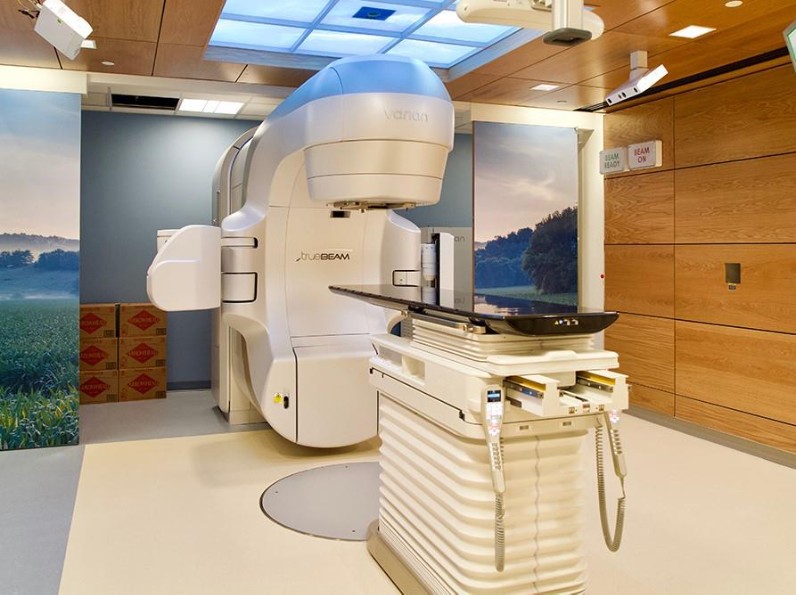
If surgery doesn’t fully treat or address prostate cancer, patients may be referred to a cancer center for radiation, chemotherapy, immunotherapy or other treatment. The Arnot Health Falck Cancer Center and Cayuga Cancer Center both use the TrueBeam Linear Accelerator therapy, a breakthrough technology in radiation therapy that allows for advanced noninvasive treatments. Clinicians can tailor cancer treatments to best fit the patient’s condition using less radiation, more accurately in less time.
Credit: Cayuga Health
Arnot Health Falck Cancer Center and Cayuga Cancer Center both use the TrueBeam Linear Accelerator therapy, a breakthrough technology in radiation therapy that allows for advanced noninvasive treatments.
These treatments can take a lot out of people. Most cancer patients report feelings of fatigue, nausea, vomiting, pain, skin changes, hair loss, mouth sores, and changes in appetite, all of which significantly impact their physical and mental health. The Cancer Resource Center of the Finger Lakes, an affiliate of Cayuga Health, provides people with support while going through treatment. This organization aims to eliminate barriers to treatment, help manage appointments, and connect patients to support groups. Their Peer-to-Peer Program is a free confidential service that connects anyone with cancer to another person whose experiences with cancer are similar. The resource center also offers assistance for caretakers and family members.
The Cancer Resource Center of the Finger Lakes is open Tuesday through Friday from 10 a.m. to 4 p.m. For more information about the services offered, call (607) 227-0960.
The Arnot Health Falck Cancer Center is located at 600 Roe Avenue, Elmira. Call (607) 737 – 8100 to make an appointment or speak with a registered nurse from 8 a.m to 8 p.m. daily using Health on Demand: (607) 7373 – 4499.
Cayuga Cancer Center has a number of locations including 401 Cayuga Park Lane, Suite 300, Ithaca; 1081 Commons Avenue, Cortland; 220 Steuben Street, Montour Falls. Call (607) 272 – 5414 for more information.